

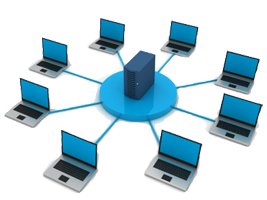
A computer network or data network is a telecommunications network which allows computers to exchange data. In computer networks, networked computing devices exchange data with each other using a data link. The connections between nodes are established using either cable media or wireless media. The best-known computer network is the Internet.
Network computer devices that originate, route and terminate the data are called network nodes. Nodes can includehosts such as personal computers, phones, servers as well as networking hardware. Two such devices can be said to be networked together when one device is able to exchange information with the other device, whether or not they have a direct connection to each other.
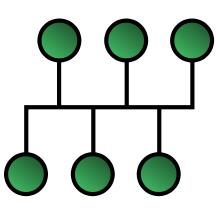
A bus network: all nodes are connected to a common medium along this medium. This was the layout used in the original Ethernet, called 10BASE5 and 10BASE2.
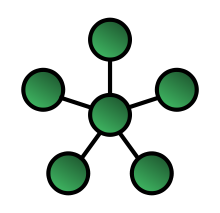
A star network: all nodes are connected to a special central node. This is the typical layout found in a Wireless LAN, where each wireless client connects to the central Wireless access point.

A ring network: each node is connected to its left and right neighbor node, such that all nodes are connected and that each node can reach each other node by traversing nodes left- or rightwards.
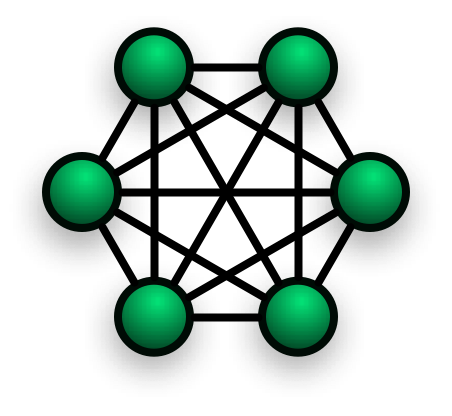
A mesh network: each node is connected to an arbitrary number of neighbors in such a way that there is at least one traversal from any node to any other.
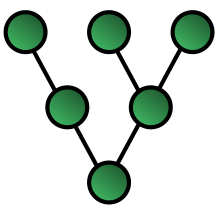
A tree network: nodes are arranged hierarchically.
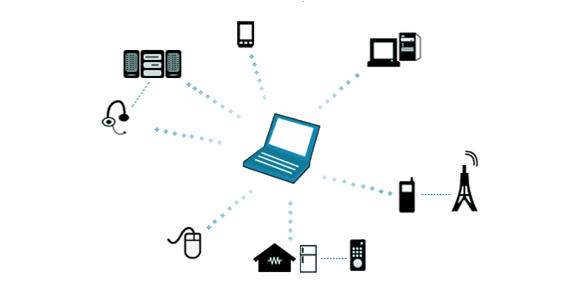
Personal area network (PAN) is a computer network used for communication among computer and different information technological devices close to one person. Some examples of devices that are used in a PAN are personal computers, printers, fax machines, telephones, PDAs, scanners, and even video game consoles. A PAN may include wired and wireless devices. The reach of a PAN typically extends to 10 meters. A wired PAN is usually constructed with USB and FireWire connections while technologies such as Bluetooth and infrared communication typically form a wireless PAN.
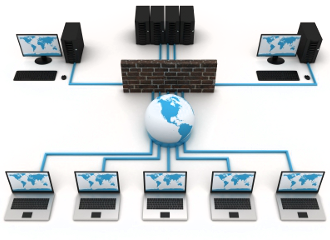
Local area network (LAN) is a network that connects computers and devices in a limited geographical area such as a home, school, office building, or closely positioned group of buildings. Each computer or device on the network is a node. Wired LANs are most likely based on Ethernet technology. Newer standards such as ITU-T G.hn also provide a way to create a wired LAN using existing wiring, such as coaxial cables, telephone lines, and power lines.
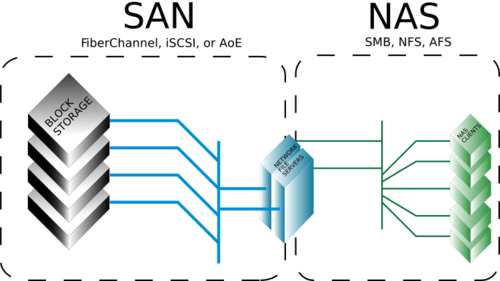
Storage area network (SAN) is a dedicated network that provides access to consolidated, block level data storage. SANs are primarily used to make storage devices, such as disk arrays, tape libraries, and optical jukeboxes, accessible to servers so that the devices appear like locally attached devices to the operating system. A SAN typically has its own network of storage devices that are generally not accessible through the local area network by other devices. The cost and complexity of SANs dropped in the early 2000s to levels allowing wider adoption across both enterprise and small to medium-sized business environments.
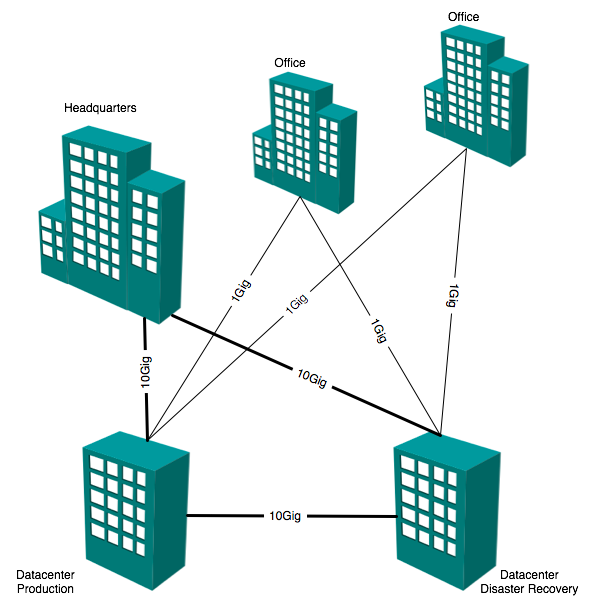
Metropolitan area network (MAN) is a large computer network that usually spans a city or a large campus.
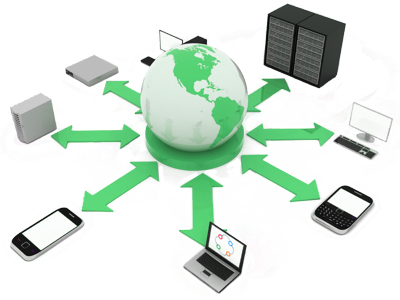
Wide area network (WAN) is a computer network that covers a large geographic area such as a city, country, or spans even intercontinental distances. A WAN uses a communications channel that combines many types of media such as telephone lines, cables, and air waves. A WAN often makes use of transmission facilities provided by common carriers, such as telephone companies. WAN technologies generally function at the lower three layers of the OSI reference model: the physical layer, the data link layer, and the network layer.
OSI (Open Systems Interconnection) is reference model for how applications can communicate over a network. A reference model is a conceptual framework for understanding relationships.
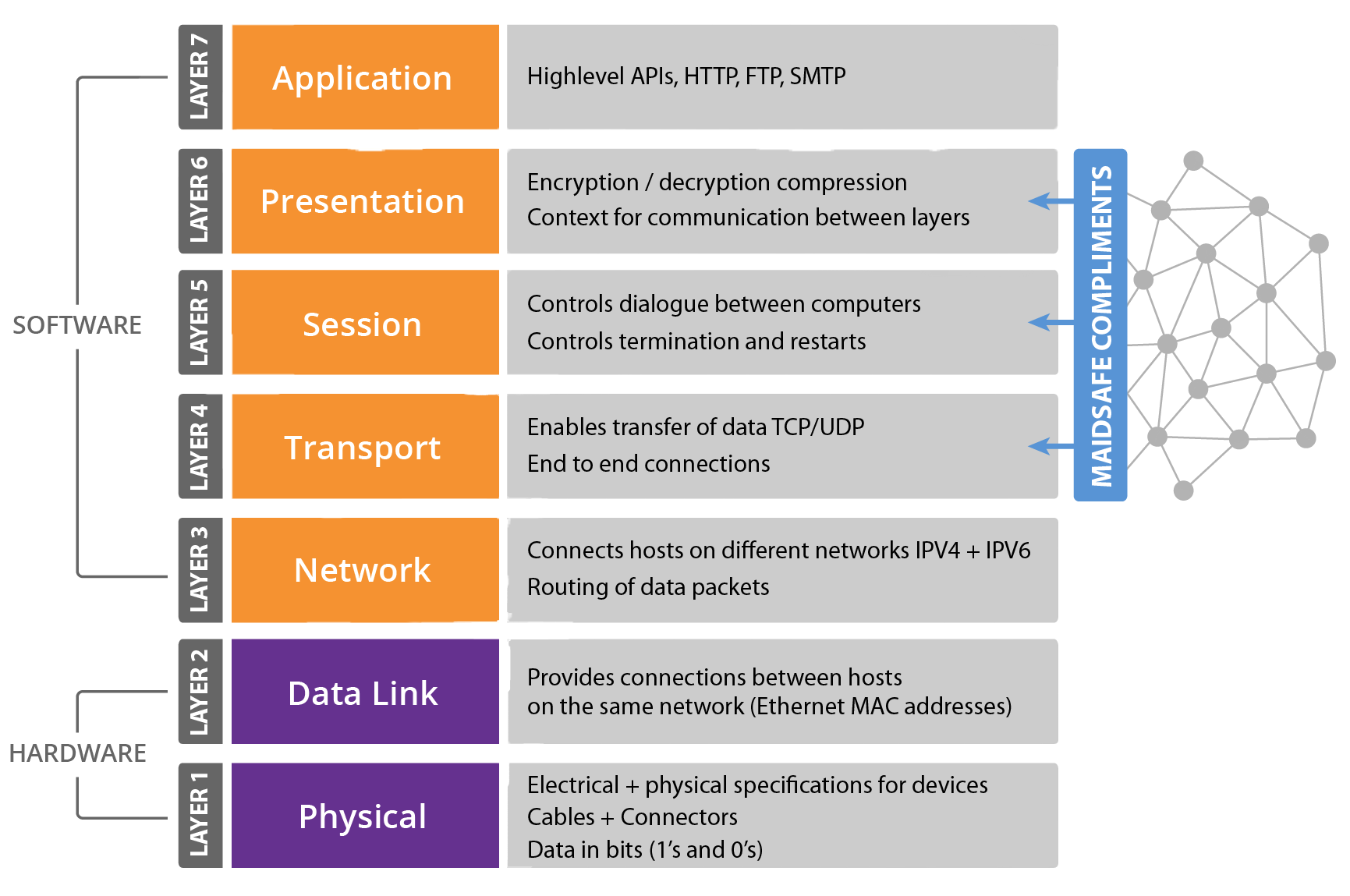
Layer 7: The application layer. This is the layer at which communication partners are identified (Is there someone to talk to?), network capacity is assessed (Will the network let me talk to them right now?), and that creates a thing to send or opens the thing received.
Layer 6: The presentation layer. This layer is usually part of an operating system (OS) and converts incoming and outgoing data from one presentation format to another (for example, from clear text to encrypted text at one end and back to clear text at the other).
Layer 5: The session layer. This layer sets up, coordinates and terminates conversations. Services include authentication and reconnection after an interruption. On the Internet,Transmission Control Protocol (TCP) and User Datagram Protocol (UDP) provide these services for most applications.
Layer 4: The transport layer. This layer manages packetization of data, then the delivery of the packets, including checking for errors in the data once it arrives. On the Internet, TCP and UDP provide these services for most applications as well.
Layer 3: The network layer. This layer handles the addressing and routing of the data (sending it in the right direction to the right destination on outgoing transmissions and receiving incoming transmissions at the packet level). IP is the network layer for the Internet.
Layer 2: The data-link layer. This layer sets up links across the physical network, putting packets into network frames. This layer has two sub-layers, the Logical Link Control Layer and the Media Access Control Layer. Ethernet is the main data link layer in use.
Layer 1: The physical layer. This layer conveys the bit stream through the network at the electrical, optical or radio level. It provides the hardware means of sending and receiving data on a carrier network.